Subscribe to Our Newsletter
TL;DR: While stress awareness often centers on adults, millions of students with dyslexia face an invisible emotional toll in traditional school systems. The constant cognitive demand of navigating a reading- and writing-heavy classroom requires immense brainpower. By recognizing how dyslexia and stress intersect, parents and educators can go beyond academic support to nurture children's emotional wellbeing.
--
Every November, people all over the world come together for International Stress Awareness Day. Most of the time, the spotlight is on adults, workplace burnout, money worries, and the fast pace of life.
But for millions of children and young people, stress doesn’t wait until they’re grown up. For many, it starts as soon as they step into school.
For young children and students with dyslexia, school can occasionally feel more like an obstacle course than a place to explore and learn.
Yes, dyslexia is a different way of processing language, and it comes with amazing strengths like big-picture thinking, problem-solving, and creativity.

But let’s not forget how tough it can be to face a school system that’s all about reading and writing. That can take a real emotional toll.
Parents and teachers usually notice the signs of a struggling learner before they really understand what’s going on inside.
If we take a closer look at why dyslexia and stress often go hand in hand, we can do more than help with reading and writing; we can start looking after our young people’s emotional wellbeing too.
The cognitive demand of dyslexia
To see why students with dyslexia often feel more stressed at school, it helps to think about how much brainpower it takes just to get through the day.
It’s sort of like trying to do your homework while someone’s talking loudly next to you and the TV is blaring. Your brain is working overtime just to keep up, and there’s not much energy left for anything else.
For most people, reading words on a page soon becomes second nature. That means their brains are free to focus on understanding, thinking, and being creative.
However, for someone with dyslexia, reading doesn’t become automatic in the same way. Every sentence can take real effort to figure out.
If you’re using most of your brainpower just to read the words, there’s not much left to understand what they mean, follow instructions, or come up with answers.
The classroom triggers: Where stress takes hold
Stress for students with dyslexia doesn’t usually come from a single source. It’s the little things, small instances of frustration, embarrassment, or feeling overwhelmed, that add up over the school day. Situations such as…
1. The terror of reading aloud
For years, teachers have asked students to take turns reading out loud in class. For a child with dyslexia, this can be the most stressful part of the day.
Instead of listening to the story, they’re busy counting ahead, trying to figure out which bit they’ll have to read, and feeling their heart race.
2. The pressure of the ticking clock
Timed spelling tests, quick-fire maths, and exams can be really tough for students who process things differently.
A dyslexic student might know the answers inside out, but as soon as the clock starts ticking, panic can take over, and suddenly, what they know and what they can write down in time feel miles apart.
3. Copying from the board
Copying from the board can be a real challenge. Students have to remember the sentence, find their place in their book, and write it down, all at once. If the teacher moves on before they’re finished, it’s easy to feel like they’re always one step behind.
4. The "red pen" effect
Imagine spending hours on a story you’re really proud of, only to get it back covered in red marks for spelling and missing capitals. When feedback is all about mistakes instead of ideas, it can feel like hard work doesn’t matter.
The vicious cycle: How stress impacts the dyslexic brain
Dyslexia and stress feed off each other, which is why for some students, struggling in class can increase stress levels, and that stress can make dyslexia feel even harder to manage.
When a child perceives a threat, such as being asked to spell something in front of a huge class, the brain's amygdala sounds the alarm. Cortisol and adrenaline flood the system, triggering the fight-or-flight response.
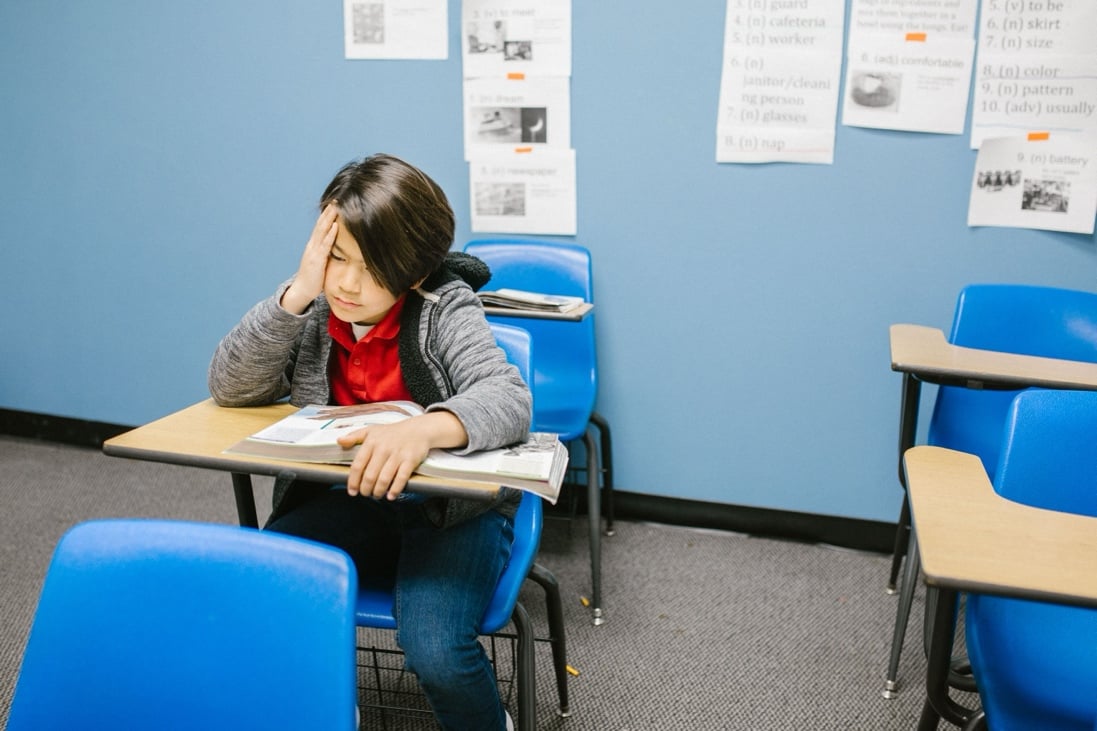
That stress response is great if you need to run away from danger, but it’s not so helpful when you’re trying to learn. When your brain is in panic mode, it’s much harder to remember things, stay calm, or process sounds and words.
Put simply, when stress goes up, it’s much harder to remember things.
A word that’s easy to read at home on Sunday night can suddenly disappear in a busy classroom on Monday morning. To someone watching, it might look like the child isn’t trying or has forgotten, but really, stress is getting in the way.
Recognising the signs: What stress looks like at home and school
Kids don’t usually come up and say, "I’m stressed, and my brain is overloaded." Instead, they show it through their behaviour, their bodies, and the ways they try to cope.
Children act differently depending on where they feel safe. That’s why parents and teachers might see totally different sides of the same child.
- Physical signs: Watch out for the classic "Sunday night stomach ache" or headaches before school, especially on days with lots of reading or spelling. These aches are often a sign of anxiety.
- The classroom mask: Stressed students often find ways to cope. Some become the class clown, making others laugh so no one notices their reading struggles. Others might act out or try to avoid work, and some just go quiet and try to blend in, even though they’re feeling a lot of pressure inside.
- After-school meltdowns: Lots of parents know what it’s like to pick up a child who’s been called "an angel all day," only to see them fall apart as soon as they get home. Holding it together at school takes a huge amount of effort, and home is where they finally feel safe enough to let their feelings out.
- Perfectionism and procrastination: Some students spend ages sharpening pencils, erasing and rewriting, or avoiding work altogether. If you don’t write anything, you can’t make a mistake.
Practical strategies for educators
Reducing stress at school isn’t about lowering expectations. It’s about removing barriers so students with dyslexia can show what they really know. When we make classrooms work for everyone, everyone benefits.
Making reading aloud voluntary or giving students their part ahead of time so they can practice, will make sure that there are no surprises.
When marking work, focus on the ideas first. Celebrate their vocabulary and thinking before talking about spelling. Maybe just pick a few key words to correct each time.
Let’s make assistive technology normal. Tools like text-to-speech, reading pens, and dictation aren’t cheating, no more than wearing glasses is. When these tools are just part of everyday classroom life, everyone gets the support they need.
Practical strategies for parents
If school feels tough, home should be a safe place, not just more school. Give your child some time to unwind after school.
Let them have a snack, play, or just relax before talking about homework or their day. Their brain needs a break before jumping back into learning.
Be their helper; if homework is about ideas, offer to write for them or use voice-to-text. Let them talk through their thoughts while you type. This keeps their love of learning alive and takes away the stress of writing.

Set a timer for homework based on what your child can handle. If they’ve worked hard for the set time, even if they haven’t finished, let the teacher know you’ve stopped to protect their wellbeing.
Creating space to thrive
When we spot the early signs of cognitive overload, notice the early signs of stress, and take away the extra pressures, amazing things can happen.
The stomach aches go away, the walls come down, and the creative, capable learner underneath finally gets to shine.
Supporting a dyslexic learner, at home or at school, is something we do best together. If you found this helpful and want more useful tips and ideas, sign up for the Succeed with Dyslexia newsletter.
You’ll get expert advice, inspiring stories, free resources, and the latest news from around the world.