

Subscribe to Our Newsletter
Last month, we spent some time looking at the experiences of women with dyslexia and how their lives interact with work, and how these unique stories are largely being consumed by a more general vision of what neurodiversity looks like that’s based in conceptualisations of it in men and school-age boys. But we know even less about the experiences of dyslexic people and other neurodivergent minds in people who are trans, and especially about how they experience work, careers and jobseeking – and this is a problem for the global dyslexia community.
Looking at Neurodiversity and Work
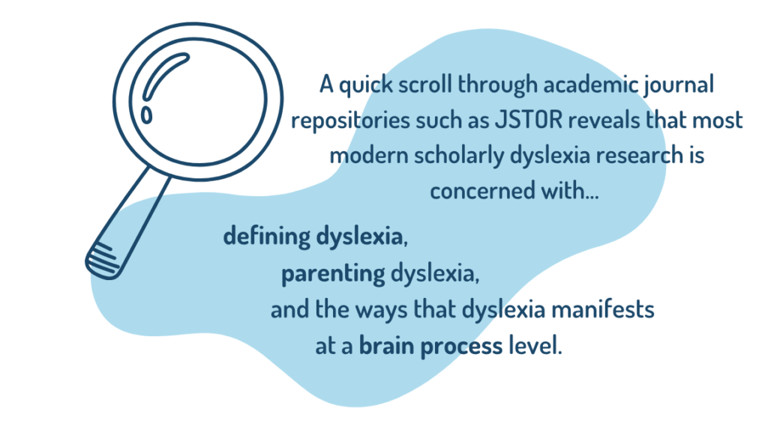
There’s a significant pool of research about dyslexia and the working experience: although we do tend to focus on it less than we focus on dyslexia in children and young people, the paradigm is slowly shifting more to encompass and support the experiences of working and non-working adults who have dyslexia too. However when we actually take a closer look at that research pool, some gaps emerge relatively swiftly and obviously.
The first that emerges is that we don’t actually have a lot of scholarly information about neurodiverse women and their specific working experiences. The studies are few and far between, and usually conclusions come as part of a wider study on neurodivergent minds at work, and aren’t benefitting from specialist focus and approach. The second that emerges is that even though information is scant about women and work in this particular respect, there’s still a whole lot more out there than we have about the working experiences found in dyslexia and being trans, as well as in other neurodivergent trans and non-binary people.
Is the information out there?
In part. Most of our information about people who are trans and ND and their experiences with neurodiversity come from first-hand content created by these people themselves, in the form in LinkedIn posts, blogs, microblogging- their own personal uploads. And whilst these are so important for visibility and making sure that these first-hand voices aren’t spoken over by ‘general conversation’, the fact that nobody’s considering trans experiences of neurodiversity and work in a scholarly, researched way means that there’s no scholarly information or findings to fall back on when it comes to trying to enact change or bring information to the table. Our research backdrop is very much limited, and that means the conclusions it draws are limited, too – and even in 2022, it’s data and research that usually facilitates the implementation of positive, systemic change at larger levels.
So we don’t have a very clear picture of what main concerns are, or what the hurdles feel like within trans, neurodiverse communities, as there aren’t actually that many people out there sharing their working experience on these platforms when we compare them to the numbers and that would likely be included in academic studies to the scale that we see in, say, looking at emotional wellbeing in adult diagnosis or reading skills in response to assistive tech intervention.
What this means for how we see neurodiversity at work
It means that our picture of what having dyslexia or being neurodivergent in a working environment is skewed. What we’re seeing is an overwhelmingly cisgender (and in actuality, quite overwhelmingly male and cisgender) experience being represented as the entire experience, with little consideration for the additional and alternative testimonies of the trans community.
So what’s it like being trans and neurodivergent in the workplace?
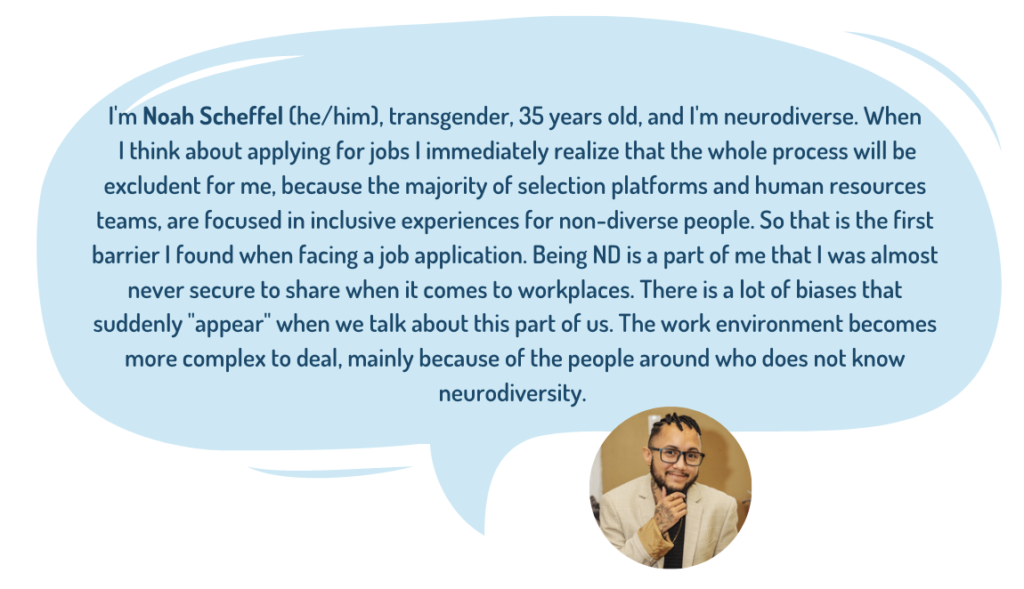
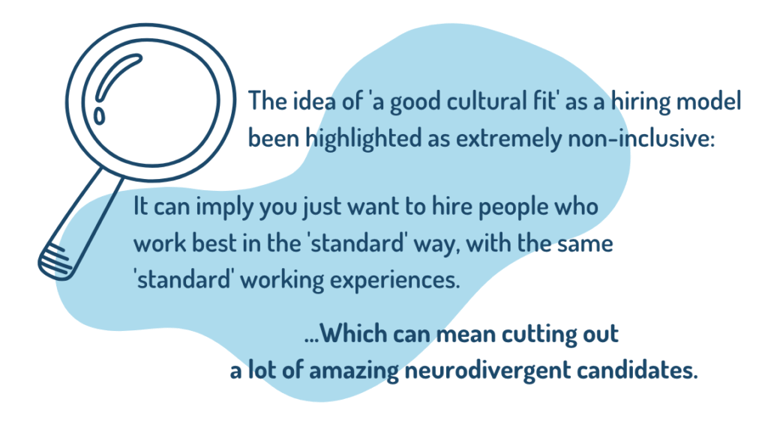
Being trans and having dyslexia- or other neurodivergent conditions like ADHD, Autism, Dyscalculia, Dyspraxia- means that for a start, the jobseeking process might feel more complex. Not only is there extant a pressure to conform to neurotypical hiring frameworks, there are also additional things to consider when it comes to disclosing to prospective employers about being neurodivergent and/or being trans during the hiring process.
Those who do often report that talking about their being neurodivergent and their being trans often makes them wonder if they’ll be creating a two-stack disadvantage in terms of their resume: asking for, say, dyslexia support on an application might open the door to accessibility arrangements, but it might also make an unscrupulous employer disregard a CV, citing that there are ‘too many things to consider’ in terms of the individual; that there is divergence from what they consider their ‘norm’ in too many ways. It’s incredibly discriminatory and indeed, criminal in a lot of places, but it’s still very prevalent in 2022: rather than creating diverse, dynamic teams with a wealth of experience and personal angles, some employers simply want to do the opposite to maintain age-old status quos in the workplace.
This is transphobia – and it doesn’t end at the hire, either. Unfortunately trans people might experience many kinds of discrimination at work, from exclusion from upward motion and external presence to outright bullying, and this can create barriers in neurodivergent individuals seeking the help and support they need to thrive in a role. Feeling unsupported, stressed and discriminated against in one aspect of the working experience is likely to make people feel like they’ll experience it in other aspects, too, and being neurodivergent is a personal thing to disclose to a company who may already not be supporting you enough. If there’s no trust network with an employer or even a team, then many people keep their neurodiversity hidden. And this can cause mental health distress and career-long problems for trans and neurodivergent people – the right support can create much more comfortable working patterns, alleviate work stress and help an individual progress.
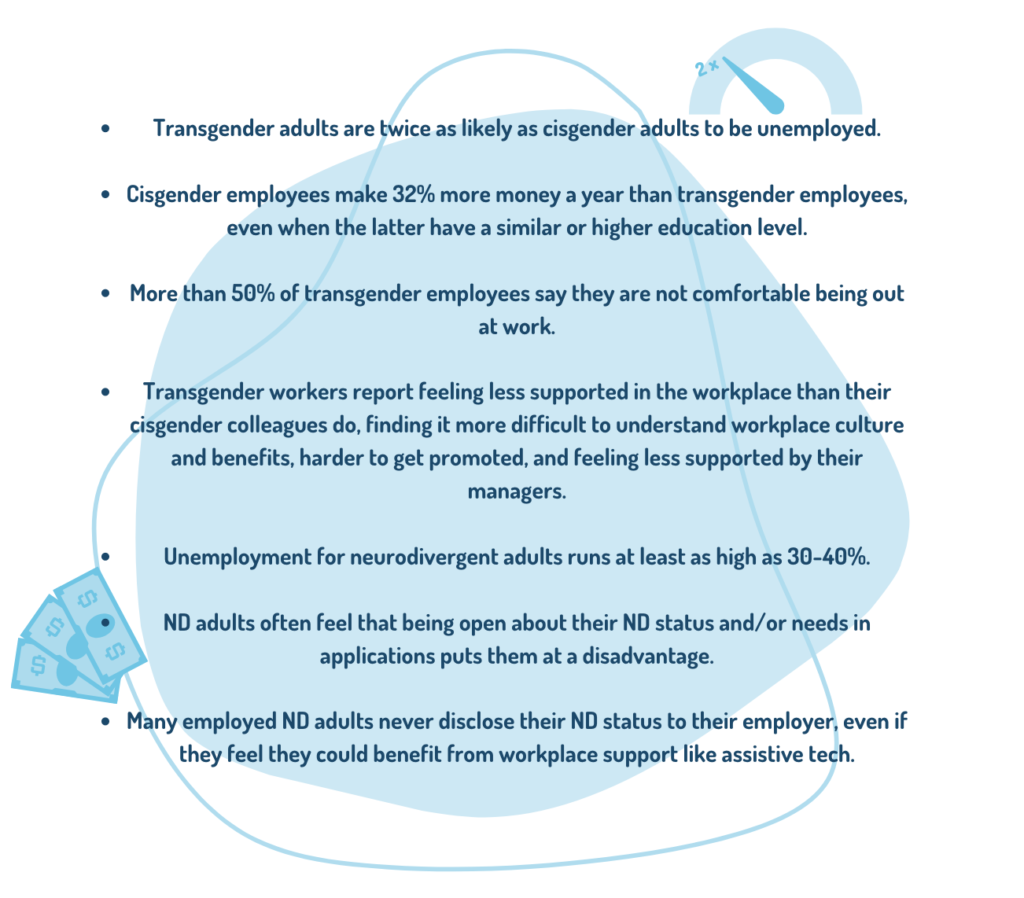
Trans and Neurodiverse Individuals: Employment Statistics
It’s important to note that although many workplaces are slowly bringing workers back to the office in a hybrid or graduated way, the remote working revolution may have had some positive impact on the working experience for people who are trans and neurodiverse. The ability to work in a way that removes the image of the self from the workspace- camera off in meetings, communicating mainly via instant messaging and email- may have allowed some to feel more comfortable that they’re being assessed on the work they do, rather than an aesthetic, in-person presence and how well that fits into company culture and norms, as well as away from office-based prejudice and bullying.
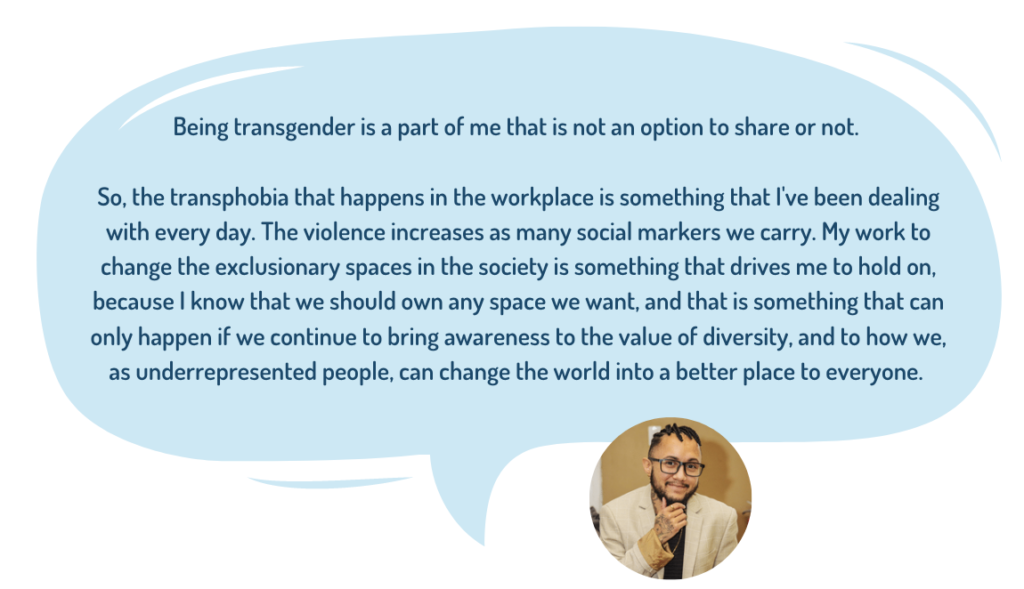
What Changes Should Come From This?
First off – we need to make sure that our research understandings of dyslexia are growing in breadth as well as depth. We understand more about dyslexia and how to support it than ever before, but this doesn’t actually mean a lot unless we’re developing a more holistic understanding of how different people experience dyslexia and how that experience is different when it’s located in groups of people. We need to look at how we bolster this research landscape to make sure everybody is represented, as some people with dyslexia’s working experience will be better supported than others.
Making progress in terms of better understanding ND women at work is fantastic, but it needs to be flanked by better understandings of how trans and non-binary ND people experience work, too – as well as across other societal groups too. If you feel confident to, reach out to researchers who have explored a gendered experience of dyslexia in their projects, and ask for information- and if it’s not extant, ask about this kind of inclusivity in their future research paths.
Secondly, work should not be an exclusionary space on any basis. Discrimination on these kinds of grounds is illegal in many countries, but it persists- depressingly, relatively commonly. It’s a company’s responsibility to make sure that the work they offer is inclusive to employees and that their offices- both virtual and real-world- are free of prejudice and individuals who might seek to compromise the working experience for somebody trans, neurodivergent, or both. Seek training and advice on how to support people in their differences, and don’t wait for them to come to you- offer support, as well as provide it.
📘 Many thanks go to Noah Scheffel for his invaluable input in the creation of this article.