
Subscribe to Our Newsletter
Considering where we were even just a short decade or two ago, there has been a huge amount of progress when it comes to supporting those with dyslexia in the world of work.
The early 2000s represents a watershed in how we think about dyslexia. It is around this time that we first began to see the beginning of a shift towards better understandings of literacy differences in education- but this greater awareness has taken a while to translate into the world of work. It's around the year 2012 when we truly begin to see adult advocacy move to the forefront of the global dyslexia landscape, but now that the doors to the office have been opened, the positive change that's happening all over the world is rapid.
However we need to avoid simply comparing how things are in 2022 to how they were in 2012, or in 2002, or even in 1982. True, there has been a huge amount of progress, and true, it's in many ways easier for somebody with dyslexia to gain access to the careers they love- but we need to avoid thinking for even a moment that the work is in any way done.
The workplace is, on a lot of levels, still not inclusive for those with dyslexia. Many businesses and industries are focusing on neurodiverse hiring, but this consideration needs to persist throughout their working lives and not just end when they sign a contract. Many people who have dyslexia feel reluctant to raise their need for support in a role for a number of reasons-
- They might feel that bringing attention to the fact they need support to work to their potential means that they're establishing themselves as less competent and capable than their neurotypical peers at work
- They might feel that accommodations make them seem more visible as a person with dyslexia, and more open to workplace discrimination or even bullying
- They may also feel that they're 'making an issue of themselves' by asking for support, and that in turn means that they'll create less favourable relationships with HR and management
- And all these in turn might mean people with dyslexia feel that they'll find it harder to gel with their teams, harder to get external opportunities, and harder to move up within the company.
These insecurities are upsetting to consider - but they do form the basis of the thinking patterns that should inform our workplace dyslexia strategy going forwards.
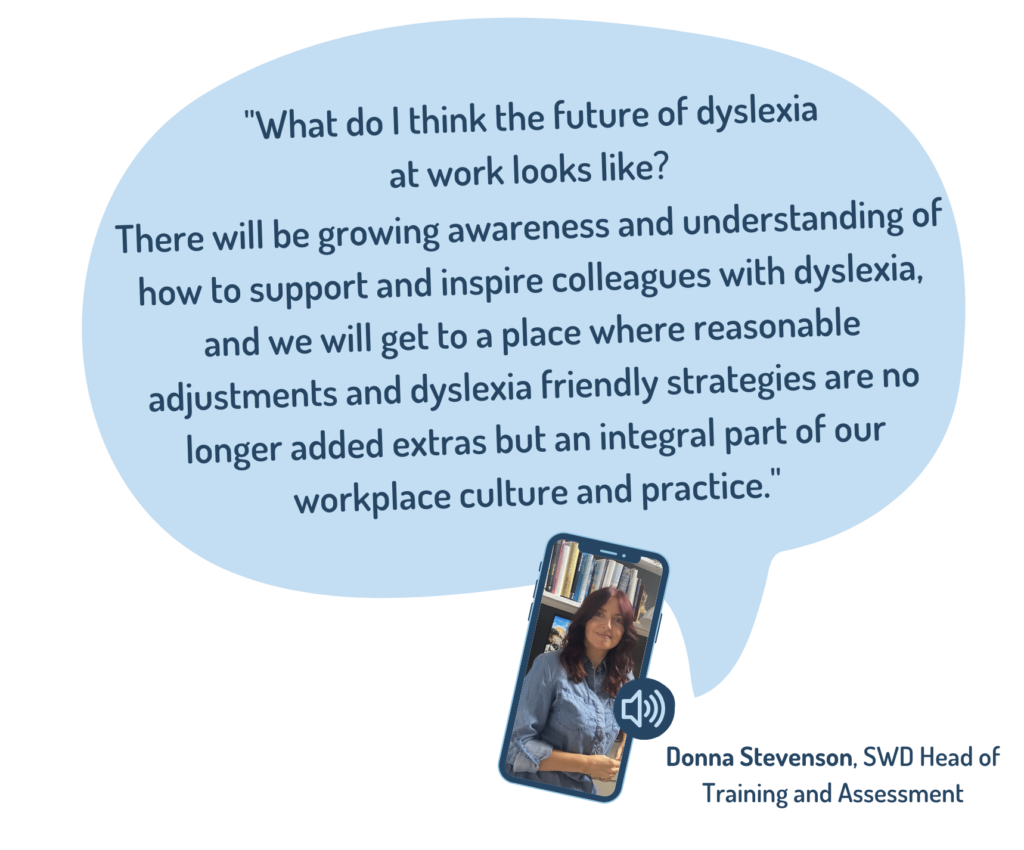
It's evident that we need to break the assumption that having dyslexia and requiring support and consideration for dyslexia is somehow 'other'- an oddity or a special consideration in our offices.
Part of this is being more open about the need for company-wide education when it comes to dyslexia and other neurodivergent conditions and seek out the appropriate training and awareness programmes. The worries above tell us that we need to build inclusivity into standard practice and instead of assuming that radio silence means all is well, become more active in how we check in with, mentor and empower our employees with dyslexia. We also need to explore the idea that support isn't just for those of us who are neurodivergent - many people at work can benefit from adaptations such as the introduction of reading support devices, options of where and how to work, and clearer, more accessible communications.
Dyslexia needs to be an integral part of our workplaces, a first consideration, and in 2022 has the potential to be a benchmark for how we approach the idea of ongoing support for those who learn and think differently. Neurodiverse teams are stronger, but only when they're receiving the right support and empowerment.