

Subscribe to Our Newsletter
The neurodiversity movement is fairly recent. Wider awareness of dyslexia, ADHD, autism and other neurodivergent conditions is booming, which is fantastic news – but it’s only really a product of the past ten to fifteen years.
Today, whilst we are still in the early stages of our progress, people everywhere who learn and think differently are able to experience the benefits of much wider understanding and acceptance of neurodivergent abilities. But the movement itself is only really gaining steam in the worlds of work and education. Socially, we’re still very much at the beginning of the curve, and these wider understandings are missing a few key demographics in the world at large, especially those of us who aren’t as online as most people.
Simply put, the neurodiversity positivity movement- and neurodivergent awareness movements- are missing a lot of older and retired people. And that’s somewhat of a problem.
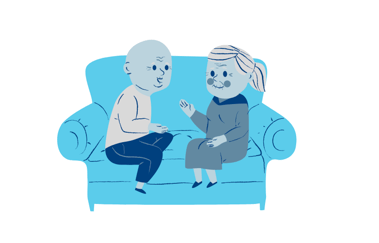
Talking to older people about dyslexia and literacy differences is important in a number of common scenarios.
🧠 You could be wondering if your child or a child in your care has dyslexia, and you want to explore instances of dyslexia or dyslexia-presenting symptoms in the rest of their family in order to gain a clearer picture, or to give the information to your assessor. Dyslexia is often hereditary, and familial information is important data when we think we’re looking at a possible case.
🧠 You may have a diagnosed child who spends time with these older relatives, and you want to have a conversation with these older relatives to make sure that whilst in their care their needs and preferences are catered to- no putting them on the spot with reading or spelling, for example.
🧠 You may be concerned about an older relative who is displaying symptoms of dyslexia and how they’re affecting their day to day life and how they communicate- as we get older, our social circles shrink, and one way that many older people keep in touch with friends and family is using word-based messaging systems. Not being able to access these can be very isolating, and dyslexia can impact on screen-based reading just as much as it does paper-based.
The problem is that many older people come from generations where neurodiversity and learning differences weren’t well understood. In a classroom of the 1950s or 1960s, there’s a fairly good chance that somebody who struggled to read wouldn’t have got the diagnosis that could have helped them, and simply been labelled as ‘not academically inclined’, ‘lazy’, or simply ‘badly behaved’. Many older people have internalised this, and could feel a range of emotions towards the idea of less developed reading skills- ranging from believing people could read well and simply need to apply themselves more to a fear that being ‘found out’ as having dyslexia will make them look different to the people around them. And some people will simply have no idea that they have dyslexia, and assume that their reading skills are simply their reading skills and that everybody experiences it that way.
This can lead to several issues. Whilst many older people are well-up and active in the dyslexia community, many might still feel as if they have to hide or obfuscate dyslexia or suspected dyslexia to you and to their peers. Unfortunately, when occasions arise that we do need older people to talk about dyslexia- whether it’s about helping them or helping somebody else- what we need is the truth, and an understanding and open mind. And that sometimes requires us giving them a little more information to go off.
- Start by explaining why you’re talking to them about dyslexia. Explore it, talk about it, and say how it manifests – some older people may be scared by a perceived medical nature to the conversation, so do your best to explain fully just what it is what happens when somebody has it.
- If you’re trying to find out about a family history of dyslexia, maybe preface it with information about how dyslexia doesn’t mean that people are poor academics or not smart; how it happens in all kinds of people. Some of the oldest people may even feel you’re asking if they or their relatives are unintelligent or wrong somehow- do your best to give information that busts the stigma and lets them know you’re not criticising.
- If you’re looking to protect the emotional wellbeing of a child or a younger person whilst they’re in an older relative’s care, be open and frank about how reading differences make people feel. It’s likely that no grandparent will intentionally make their grandchild feel uncomfortable when it comes to reading, but they may do it unintentionally often – asking somebody to read the back of a recipe packet, gifting them books that they can’t manage yet and asking for their input on games or puzzles can all add up.
- If you’re concerned that somebody older is struggling to stay connected with their circle due to dyslexia, it may help to explore in terms of tech-first solutions. Talk about assistive tech like screen readers and pen-style text scanners as being similar to glasses or a hearing aid, which they may already have.
- If you’re chatting to someone older who you suspect has dyslexia, appreciate that they may not know, and this may bring forward some emotions. Many older people who pursue a diagnosis experience a feeling of ‘wasted potential’; wondering how different their lives could have been had their reading been supported like it tends to be today. Would they have had a different career, made different friendships, done more things? It’s natural to mourn the loss of these, but remind them that it’s never too late to get back into reading with the support, diagnosis and solutions they need.
- Encourage assessment. Although it’s an odd feeling, many older people who have been diagnosed report feeling more at ease with themselves after the initial shock and retrospection wears off. It might open the doors to new support too- with the right assistive tech, somebody with a pen-style text scanner might be able to read their parent’s books and letters, their own mail and prescriptions, and their grandchildren’s books for the first time.
Talking about dyslexia can come quite easily to people who have grown up in a neurodiversity-positive formative period. But when it comes to older parents and grandparents, a breadth of information was lacking when they were coming across these things for the first time, which led many people to never recognise dyslexia or even have wrong presumptions about the condition and what it means. Talking to older people about dyslexia is an important part of making sure that our message about dyslexia positivity isn’t confined to younger, more online generations – this progress needs to be reflected everywhere, not just in the classrooms and workplaces of the future.
You can find some great clear, concise starting points for opening up a conversation about dyslexia with older generations at The Dyslexia Association.