
Subscribe to Our Newsletter
“It is out of date to throw a CV in the bin because of a typo, according to Matt Hancock MP.
It’s certainly not the first time he’s spoken out about dyslexia and literacy differences. The politician is a vocal advocate of universal screening for school-age children and is a key figure in the push behind the UK Dyslexia Screening Bill, as well as made public his own dyslexia and spoken candidly about how, for 20 years, he kept it a secret in fear of how people in his field would perceive and treat him.
“What you have to look for is somebody’s real capability of doing a job, not a proxy for it,” he commented last week in The Telegraph. “People often use your straight-line writing as a proxy for capability. Of course, there is a category of jobs for which that is critical, but there are other jobs where what you need is a creative brain and the computer can do the spellcheck.”
But what’s the reality of the situation? Is it really out of date to bin a CV because there are spelling errors or typos on it? And what does this mean for how we perceive standards of literacy within the job market across the board?
So, first things first: is it out of date to throw a CV in the bin because there’s a typo in it?
Honestly? Yes. Anybody can make a typo or a spelling error, and if you’ve got dyslexia or literacy differences, there’s a chance you’ll make them more frequently than somebody who doesn’t. It certainly doesn’t mean that you’ll be bad at the job you’re applying for, and it’s out of date and not very neurodiversity-friendly to exclude a CV from the proceedings because you’ve made a small mistake on there.
Are there exceptions to the rule?
Some people might make an argument that if the job you’re applying for is based within writing or editing texts, then having spelling errors in the application demonstrates an inability to align with some of the aspects of the job. But realistically, there are plenty of writers with dyslexia out there who can create texts perfectly well- brilliantly, even- and there’s a lot of difference between firing off a job application on your lunch break to carefully writing, editing and re-editing a work project.

Others make a case that people whose reading and writing skills aren’t on par with the average might not be well suited for jobs where there might be large ramifications for spelling errors or reading errors. One example often given is in the medical profession, where words as horrendous as dimethylamidophenyldimethylpyrazolone are a norm (we’re not even joking), and there’s often only a few letters difference between drugs and medications in the same family- and misreading them for the wrong thing could seriously affect somebody’s health. It is true that misreading something in a medical setting has serious ramifications, but there’s also a whole host of support and assistive technology that can make assurances and make double-checking easy – and also there are actually fairly limited roles in the medical sector where reading and dispensing are key aspects of the job, if you’re thinking about a medical career and you’re nervous about it.
So back up. Why are we so obsessed with ‘a good standard of reading and writing’ on a CV then?
Pretty much since mass literacy became a thing in the UK at the end of the nineteenth century, we’ve idolised a high standard of written English as a cultural height to aspire to on a personal level. We equated good written English with not only competency within a job role and an ability to communicate effectively, but with epithets like industriousness, moral character and a good attitude towards working, too.
There was a widespread idea during the fin de siècle that most people had poor reading skills as a result of a lack of effort or a moral failing on their part. Rather than, say, dyslexia, other neurodiversities, vision problems, a lack of access to education, lack of support in education, early school leaving ages, very limited access to books written at different skill levels, widespread borderline abusive teaching methodologies and the general stresses of trying to exist in a world where William Wordsworth was considered a good poet.
Basically, somebody with good reading skills was an all-round great chap to know, whereas somebody with poorer reading skills was a layabout who couldn’t be bothered.
Yikes. So what happened if you couldn’t read and write confidently and were looking for a job?
Depends where you were in society- and when we’re talking about. If you were looking for a manual labouring job during the late Georgian and early Victorian era, it wouldn’t really have that much of an effect on your job prospects as long as you could throw clay around, hammer some iron or dig lumps of coal out of a coalface. People didn’t really apply for jobs like we have a concept of today- it was more like turning up and seeing if the foreman or manager liked the look of you. If you were looking at occupations more common to the middle classes such as bookkeeping or secretarial work, however, low literacy would hold you back when it came to holding onto a position.
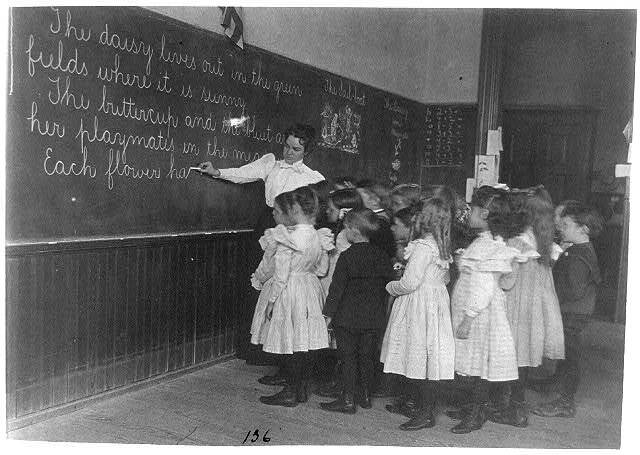
As we move forward into the late Victorian period, however, even people who were looking at work as potters, labourers, domestic servants and the like were expected to have pretty strong reading and writing skills even if their job didn’t necessarily have a large reading and writing element to it. Standards of literacy were lower though, and it took a much lower reading skill back then to be considered as a strong and confident reader. But it remains that due to education reform and so small amount of social campaigning by Charles Dickens, between 1851 and 1900, there was a rise in British male literacy from 69% to 97% and British female literacy from 55% to 97%. So if you were a woman born in 1830 who died in 1900, and you went your whole life being more or less unable to read, you’d have gone from being about 1 in every 2 people in your youth to 1 in about every 50 people by the time you grew old and passed away.
That sounds like a good thing?
It was a good thing – mass literacy is a huge turning point in social history, and had a pronounced effect on everything from employment patterns, organised campaigning, suffrage and labour movements to how people spent their free time and recreation. But along with it came the expectation that basically everybody should be able to read confidently without any of the support strategies, assistive devices or recognition of conditions like dyslexia that we have today. By the 1920s and 1930s, reading standards became even higher, meaning that people who did struggle with reading even if they could read a little were becoming more and more rare.
There was some building awareness of dyslexia during the period, but most of it was confined to academic circles, and it was treated more of a curiosity as opposed to something widespread and prevalent. Your average employer or job poster wouldn’t have had any understanding of dyslexia, what it meant or how they’d need to support somebody in the workplace, and they’d most likely have seen an inability to read with confidence as a symptom of laziness, illness or poor schooling. And this belief persisted in a lot of places throughout the first two thirds of the 20th century – speaking to any older person with dyslexia will usually reveal that they dealt with attitudes not dissimilar to these from some source or the other for most of their childhood.
So basically we’re holding onto an outdated standard from before we really understood dyslexia and literacy differences?
Pretty much. Equating a CV with no spelling errors with an inherent ability to do the job at hand plays into these nineteenth- and early twentieth-century beliefs that reading and writing with confidence is emblematic of a good working attitude, high skill levels and general all-round being a good egg. It’s true that a lot of UK jobs have more of a reading element to them now than they did fifty years ago, but it’s also true that people who do have dyslexia and need longer times or support to read can be supported in the workplace with simple tech solutions that are available under the UK Access to Work Grant.

Realistically, there are very few jobs that require impeccable reading and writing skills off the bat – as Mr. Hancock said last week, there’s very little out there in the job market that require levels that a computer with a spellcheck function can’t fix up. So it’s time to think about neurodiverse people, their amazing skills and building a fairer workplace for all as we move into the rest of the decade, and leave behind the outdated idea that having a spelling mistake on a CV means that you’re going to be bad at a job and you’re not a good worker.
…But even if we do manage to beat the stigma, there are sadly other things at play that might undermine the recruitment process for somebody who’s neurodiverse.
This isn’t going to be great, is it?
No. Automated recruitment software is rapidly becoming a norm in a number of industries, and neurodiverse people everywhere are reporting that they’re feeling disadvantaged because of it. It’s been around for the past decade, but the pandemic has seen a huge uptick in its usage, largely due to the prevalence of remote hires that working through social distancing measures has necessitated. Some of these software systems put candidates through an automated interview before they ever get in touch with a real person, where things like their speech, hesitation, and eye contact are monitored – which can be an issue for people with dyslexia, auditory processing disorder, ADHD or autism.
On the written side, CV screening software can be similarly problematic. Some software only screens for key words and picks out CVs based on how tightly they align with the job description, but others can be set to exclude CVs that demonstrate spelling errors or low-grade lexis.
You can read Matt Hancock MP on CV standards in The Telegraph, and for more information on AI recruitment processes and how these could actively disadvantage people with neurodiversities, There’s a much more in-depth look at this kind of software available at BBC Three.