
Subscribe to Our Newsletter
The 8th of March is International Women’s Day!
It’s an event where we celebrate the social, economic, and cultural achievements of women all over the world. It’s held on the same day every year, and it’s one of the most important days to champion women’s achievements, raise awareness about equality, and fundraise for female-focused charities, as well as celebrating the inspirational women in your own life
And whilst International Women’s Day is a day to celebrate the achievements of all women, today we’re focusing on the amazing women who have dyslexia or literacy differences. From space science to seventies songwriting, we’re taking a look at some of their powerful success stories, and the ways that they made waves for both women and people with neurodiversities all over the globe.
- Erin Brockovich
Yes, that Erin Brockovich from the film- although that's Julia Roberts, if we're going to split hairs. The real Erin was labelled in school “The Girl Least Likely to Succeed”, and struggled in early education due to her dyslexia, but thanks to some inspiring teaching experiences went on to become an internationally renowned lawyer. She helped win the largest class-action lawsuit in US history, worth $333 million, and had to read through thousands of pages of medical records and legal briefs to push the case over the finish line. Brockovich maintains that it’s actually dyslexia that helped her career as a lawyer and she remains a powerful advocate for people with literacy differences in the workplace and in education.
- Agatha Christie
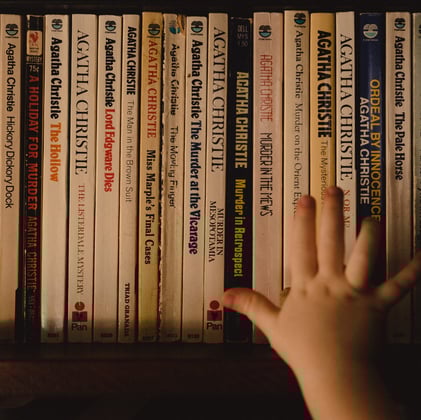
The world’s #1 mystery writer, the creator of your grandma's TV favourites Miss Marple and Hercule Poirot, and by some people’s reckoning, even the bestselling author of all time- Agatha Christie is pretty important. Christie herself described herself as struggling to read and write from an early age- “writing and spelling being extremely difficult,” - and wasn’t expected to learn to read properly until she was around eight years old. Literacy struggles appeared to feature heavily in her writing process even as an adult, and it's these factors that have led a lot of researchers to believe that what Christie actually had was undiagnosed (or perhaps more accurately, misunderstood and unsupported) dyslexia. We don't have a precise clinical profile, but most biographers agree that many of the most common signifiers are apparent in Christie's childhood learning and experiences of writing - which makes the whole world-renowned author thing even more impressive that it was already.
- Dr. Maggie Aderin-Pocock MBE
Diagnosed with dyslexia at the age of eight, Dr. Maggie is a British space scientist and educator well-known for raising the profile of physics in the public eye. She won the William Thompson, Lord Kelvin medal from the Institute of Physics in 2020 for her public engagement work, and is well-known for visiting schools as an advocate for women and BAME people getting into the sciences. She’s presented a number of TV programmes as well as leading research on the Aeolus Satellite, a key part of monitoring climate change in a rapidly-shifting world. She was awarded an MBE in 2009 for her tireless work in the field of science education, and remains an advocate for women and neurodiverse people in the sciences all over the world.
- Carol Greider, Ph.D.
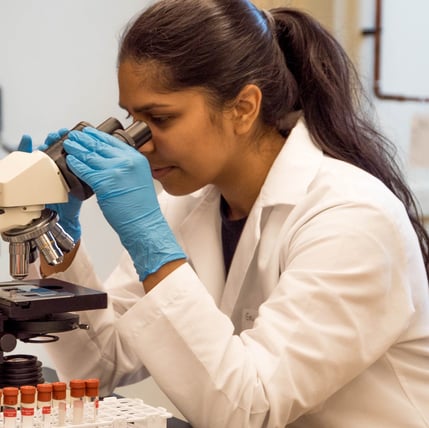
Carol Greider was a 25-year-old graduate student when she established herself as one of the world’s pioneering health researchers. Despite being put in remedial classes in school and having difficulty spelling and sounding out words, Greider and her research team discovered telomerase, an enzyme that plays an important role in cell division and has real potential to fight cancer and age-related disease. She was awarded the Nobel Prize in Physiology and Medicine in 2009, and believes that it’s dyslexia and the way it's honed her problem-solving ability that is at the core of her outstanding skills as a scientist.
- Nancy Brinker
It wasn’t until her son was diagnosed with dyslexia that Nancy Brinker—winner of the Presidential Medal of Freedom, founder of the Susan G. Komen Breast Cancer Foundation, former White House Chief of Protocol and all-round powerhouse —identified that she had dyslexia too. She struggled with math and spelling in school but found ways to use memorisation techniques and in-class performance to supplement her poor scores in standardised testing. She’s made history, both in her governmental roles and in spearheading cancer research and treatment strategies, and uses her platform to urge parents and children not to fear dyslexia, but embrace support and the merits that a different kind of viewpoint and learning experience can bring.
Fantastically quotable moment: “You can’t be discouraged just because you’re a round peg that doesn’t fit in a square hole.”
- Cher
Whether you know her for her pantheon of 80s top-ten hits, her role in absolute bop-fest Mamma Mia, or her antics going viral with hilarious and pithy tweets, Cher is a household name. What’s less well-known is that she has dyslexia, and often found herself struggling in school and having to learn solely by listening as her reading skills struggled to keep up. As a result of this, she ended up dropping out of eleventh grade after just two weeks of classes to focus on building her performance skills - and whilst we're usually advocates of the whole 'stay in school' thing, we have to admit that we're pretty glad she did, or else we might not have had If I Could Turn Back Time or Believe. Cher has gone on to win acclaim that’s spanned over five decades, and even bagged herself an Academy Award for Best Actress in 1988.
International Women’s Day is the perfect day to celebrate inspirational women—whether they’re dyslexic or not—and talk about the positive impact they’ve had in your lives. It’s also a great time to enter into the conversation on social media and support International Women’s Day’s #BreakTheBias movement. This sees people all over the world show their support for calling out gender bias and inequality, and work towards a more inclusive future by forging equality across the board.