

Subscribe to Our Newsletter
The number of children registered for home education in the UK went up by a staggering 75% during the first eight months of this school year according to figures from a BBC investigation. More than 40,000 pupils were formally taken out of school in the UK by their parents and caregivers between September and April 2020 – compared to a much smaller average of 23,000 from the 2018 and 2019. Figures from Ofsted also show that almost 60% of schools saw at least one pupil removed to start full-time home schooling, with the most occurring in the north-west of England where there has been a 92% increase in home education.
The idea of educating children in their home temporarily has become more normalised due to remote learning protocols in Covid-19 lockdowns – many families all over the world have had to resituate their concept of schooling and get used to a virtual model where students attend lessons online. The move has largely been regarded as unideal by education professionals and parents alike, however some students- especially those with anxiety, chronic conditions or physical disabilities- have reported missing the option to learn remotely. But with schools largely reopened and education back to normal (or as normal as it can be under pandemic conditions) a move towards widespread permanent home schooling is unprecedented in UK history, and on this sunny Wednesday morning, we’re taking a look at why this might be the case in 2021.
It’s the New Normal
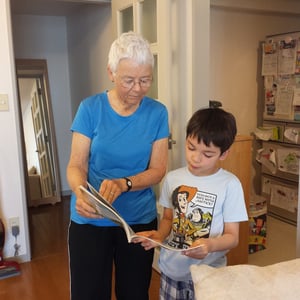
Many parents and caregivers simply hadn’t entertained the thought of home education before it became necessary to stop the spread of Covid-19 – but a large number of families might have realised that it actually suits them very well. It allows people to have a greater role in their child’s development, and for people who spend more time at home, it could represent a great way to bond with their children and maybe even learn some things themselves. Although it’s still important to make sure that children are following the national curriculum if they’re going to be submitted for GCSEs and A-Levels, pandemic home schooling for some parents and carers has opened up a world of active engagement with their children’s progress, and for some families, this seems like something they want to continue with.
Covid-19 Anxiety
Although staff are trying valiantly to stop the spread with bubble systems and isolating year groups with positive cases, schools remain a hotbed of Covid-19 transmission and for families who have unvaccinated or clinically vulnerable people in their households, this is very troubling. It’s very easy for an asymptomatic child to carry the virus into a house unnoticed - until it finds its way to somebody elderly or with respiratory problems. So by removing schools from the equation and educating children at home, it’s a way of keeping everybody as safe as they possibly can be whilst the risk levels are still high.
A Change of Pace
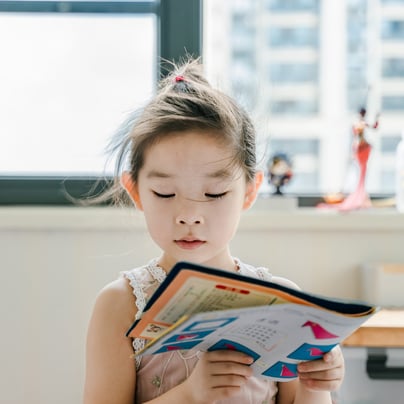
Child-led learning is cited by many home educating families as one of the major benefits of the system: instead of a child having to learn at the class’ pace, instead, they learn at their own pace, and there’s always time to go over things in more detail or move on faster if the work becomes too easy. It’s also easier to focus on the things that a learner is passionate about, choose books they’ll actually be interested in and use their hobbies to facilitate the learning of science and technology topics – it’s a much more personal way of learning.
Some Children Prefer It
Just like you might have realised over the past twelve months that you prefer working from your spare bedroom, some children have realised that they much prefer learning from home. For children with social anxiety, home education limits the amount of anxiety-inducing situations that they might find themselves in on a daily basis; for children with ADHD, it might allow them to focus better without all the distractions of school life around them. And it’s not just for neurodiverse kids either – many children find many aspects of school life jarring and uncomfortable, from bullying and social problems to large and disruptive classes, and since finding another way to learn during lockdowns, they’re unwilling to give up a way of learning that suits them much better than the norm.

However…
There is a flip side to home education. Although some families might truly enjoy it and relish the challenge, some find it too difficult to maintain standards academically, especially as the people doing the teaching often aren’t qualified educators who are trained to deal with problems that arise. Also some parents might be fantastic at educating children in subjects like English and history, but their own maths or physics skills might let them down, and they can’t provide a comprehensive overview of the subject or support when a child is finding things difficult. Another thing to consider is that some children find it too challenging to maintain a learning mindset when they’re in their recreation space, at home, and simply can’t concentrate or engage with what they’re being taught.
Home education also doesn’t have all the resources that a traditional on-site schooling experience will have, like a science lab, a gym or an art studio – and understandably, some parents might not be keen on installing a Bunsen burner in the back bedroom. Another resource that home educated children might not benefit from is the presence of their peers – it’s easy to feel isolated when you’re not surrounded by people your own age, and school is a huge part of learning how to socialise and forming friendships. Special effort has to be taken with home educated children to make sure that they’re reaching out to people their own age whether it’s in home school meetup groups, dance or sports classes, or other social communities – personalised education is great, but social isolation at an early age isn’t.
Home education is a divisive subject, and It’s all about working out what’s best for your own family, especially in times that are (although I’m sure we’re all sick of this particular phrase) unprecedented. You can find more information on the idea though your local council via the GOV.UK portal, and EdPlace has a great in-depth run-down of the pros and cons of taking learning out of the classroom.