
Subscribe to Our Newsletter
2022 is our year of inclusivity. It’s an integral part of the Go Red for Dyslexia campaign – it says on all of our posters that we want to foster greater awareness of dyslexia and literacy differences, and advocate for a more accessible and inclusive world. But inclusivity is one of those concepts that’s so huge, so wide-reaching and diverse that sometimes we lose the meaning of it when we reduce it down to a phrase or a slogan – but it’s a vital element of the global dyslexia conversation. So that’s why we’re exploring it a little better today.
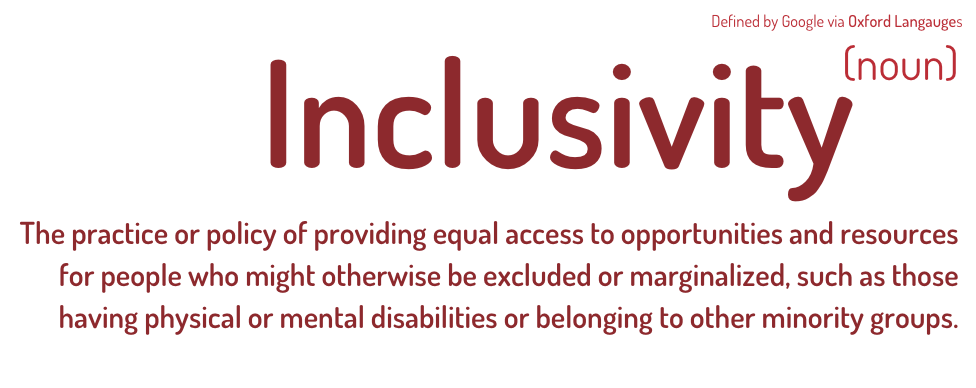
If you open a dictionary and look it up (although we’re not sure how many of us still own a paper dictionary in 2022, let’s be real here), you’ll come across a definition pretty similar to the one above. It’s going to say something along the lines of providing equal access to opportunities and resources for people who might otherwise be excluded from them, and perhaps even give an example of people with neurodivergent minds, physical differences, or belonging to other groups in society who might find themselves ‘blocked out’ of these arenas.
But it does go a little deeper than these definitions suggest.
Inclusion isn’t just providing equal access. That’s simply a matter of opening a door and removing roadblocks that might prevent people from entering- what we need in 2022 is a much more active form of inclusion, where we invite people in rather than just throwing open the threshold. It’s one thing to streamline your recruitment process to make it more dyslexia-friendly… but it’s another in its entirety to actively promote the vacancy on job boards that cater towards people with neurodiverse differences, mention on applications that you’re a neurodiversity-positive employer and even that you’re looking to speak to neurodivergent applicants.
It’s less about opening a door and expecting people to rush in, and more about making the inside an environment that works and is inviting and welcoming for everyone.
It might seem like splitting hairs, but it’s an important definition whether we’re talking about work, learning or the world at large. People with dyslexia and literacy differences have likely many times found themselves ‘blocked out’ of a situation- be that a job opportunity, a social event or an educational experience- by the way that they experience their symptoms. Opening a door after what could be almost a lifetime of feeling excluded from these things isn’t enough to buck the trend – so that’s why we need to be loud and proud about inclusivity, actively seek out the global dyslexia community, and be the change we want to see in 2022. We don’t only want to see inclusivity – we want to see people being inclusive, too.
So that means things like speaking up whilst you’re recruiting. It means things like fostering greater awareness of dyslexia in the classroom, as well as providing students who need one with a reading aid or other kind of literacy support toolkit. It means something as simple as sending powerpoint slides you’ve used in a meeting to participants after the event, so they can go through them at their own pace, or sending voice notes to a group chat instead of a typed response – it’s often the little things.
For our Year of Inclusivity, we want to see people taking inclusion seriously and really thinking about how people in marginalised groups- especially those with dyslexia and literacy differences- experience these open doors. We need to go further than breaking down barriers and actively create spaces where people can flourish, feel included and empowered just the same as neurotypical and predominantly non-marginalised groups do too.
If you’re an educator and you’re wanting to take some time with your class this October to talk about inclusivity, dyslexia awareness or any other aspects of accessibility, you can find our Go Red for Dyslexia schools resource packs courtesy of our friends at Twinkl- check out our Go Red for Dyslexia Assembly Pack, Go Red for Dyslexia No-Pen Outcomes Day Pack and Go Red for Dyslexia Year of Inclusivity Pack for how to Go Red in your school or college.