
Subscribe to Our Newsletter
Firstly, let me tell you about Aotearoa. Aotearoa is the name for New Zealand in Te Reo, the language of the indigenous Māori people in New Zealand. Loosely translated it means ‘the land of the long white cloud’. There is a conscious effort in New Zealand to rescue Te Reo, as it was in danger of extinction. Also, under the Treaty of Waitangi the Māori people are guaranteed equal rights but sadly, the Māori people are at the poor end of many national statistics. We are all making an effort to learn some elements of Te Reo. Te Reo is one of three official languages, along with English and Sign Language.
I have been fortunate enough to attend many conferences about dyslexia in the United Kingdom and Europe, and it is very clear that dyslexia has a much higher profile in the UK than here in Aotearoa New Zealand. We have no legislative framework like the Equality Act, and we gather no statistics on dyslexia. Our Ministry of Education denied the existence of dyslexia until 2007.
The legacy of that is that dyslexia has been very invisible and poorly understood here. Children with literacy acquisition difficulties are not routinely provided with a dyslexia diagnosis, and most people with dyslexia remain undiagnosed.
An international scan indicates that the UK is a standout performer in dyslexia support. The southern hemisphere not so much. Our Australian cousins seem to be providing a similar, low level of support for people with dyslexia. However, in spite of the lack of supportive legislation there are good things happening down here in the Shaky Isles.
The Plumber, Gasfitters and Drainlayers Board
A local success story here in Aotearoa New Zealand concerns Plumbers, Gas Fitters, Drainlayers and Electricians. All these trades need to be registered in order to carry out their work without supervision. That is obviously important, because all those trades handle things that could be lethal to humans if not handled correctly. Obtaining registration involves passing a registration examination.
Authorities had discovered that there were thousands of young apprentices who had completed their apprenticeship training but had not succeeded in achieving registration. Evidence confirmed that they were all competent tradespeople. They just struggled with a written registration examination.
Further exploration revealed that many had undiagnosed and unsupported dyslexia. A simple assessment to identify their dyslexia was conducted, along with a recommendation to allow them to sit their registration examination with extra time with or without a reader/writer. Some even secured a pathway to registration via an oral examination.
The final outcome is an increased number of young tradespeople securing registration. For most that meant a significant salary increase and bosses who were able to get their employees to do more work unsupervised. Many young tradespeople have been able to increase their incomes by 30 percent.
The story of Matthew Van Sant
Matthew is a successful tradesperson with his own plumbing business in Cambridge in the Waikato region. Not long ago he was struggling to complete his plumbing theory work – with no hope of ever securing his plumbing registration qualification. An astute training advisor wondered if his issue was undiagnosed dyslexia. He had his dyslexia identified, secured some assistive technology and, in time, passed his registration examination with reader/writer assistance. Matthew is a very competent tradesperson, and now he is not held back unnecessarily because of his dyslexia.
The Dyslexia Friendly Quality Mark. (DFQM)
Here in Aotearoa New Zealand, we unashamedly stole the idea of a Dyslexia Friendly Quality Mark from the United Kingdom. However, the New Zealand version has been tailored to an Aotearoa New Zealand context and is significantly different to the United Kingdom version. Firstly, the kiwi version is targeted at tertiary education institutions and “education-adjacent” organizations, whereas the UK version is primarily aimed at primary and secondary schools.
The Dyslexia Friendly Quality Mark was officially launched in September 2021. A central feature of the Aotearoa New Zealand model is the Dyslexia Friendly Charter. This document is a public statement on the institution’s website and displayed in the front foyer that the organization welcomes learners with dyslexia and that learners with dyslexia can feel safe there, because staff in the institution follow best practice in supporting learners with dyslexia.
The standards contained within the Dyslexia Friendly Quality Mark are very holistic and cover all parts of the institution, from the Board and senior management to practicing tutors and educators, learning support staff, resource writers and those staff in charge of the IT systems and the website. Institutions who sign up to achieve the Quality Mark take several months to reach the standards required.
The first three institutions who signed up as part of the initial pilot have all met the standard and were awarded the DFQM earlier in 2022.
Currently, there are two batches of ten institutions going through the steps to secure the DFQM.
The vision is that, in time, the DFQM will be adopted by more that education institutions. Already there is interest by some companies in the general workforce and some government agencies. The primary and secondary schools in the compulsory education sector are also in our sights.
The Value Proposition
The efforts involved in achieving the DFQM are considerable. It is a rigorous set of standards, requiring significant efforts to achieve. Our initial feedback is that companies are attracted to the Quality Mark for several reasons.
Firstly, they define best practice and are an independent benchmark of quality provision. Secondly, they provide a focus for the professional development of staff. Thirdly, the standards provide reassurance for learners or potential learners that an institution with the DFQM is a safe and supportive place to learn.
Here in Aotearoa New Zealand the dyslexia enthusiasts see the DFQM as a significant and concrete step forward in achieving better outcomes for people with dyslexia. Over time it is believed that the DFQM will foster a better understanding of dyslexia across other parts of the economy.
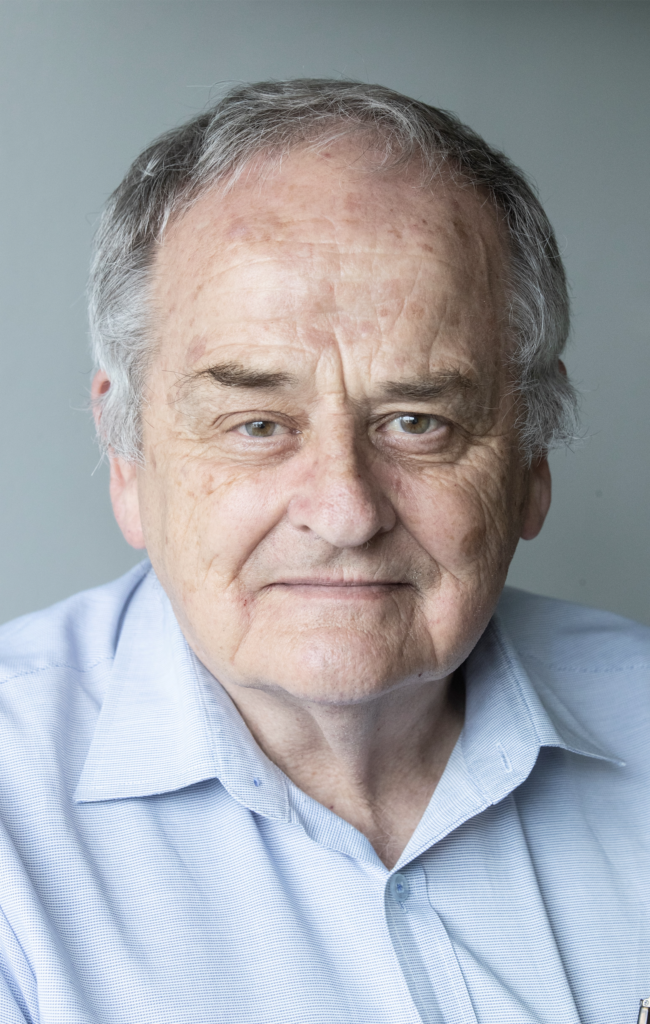
Mike Styles is a self-employed consultant, researcher and trainer focusing on dyslexia in adults. He has had 25 years working with literacy and numeracy issues in adults and in dyslexia and neurodiversity for tertiary education learners and adults.
He has led several national research projects exploring how best to support adults with dyslexia in tertiary education and the workplace. In 2018 he screened a large sample on prison inmates to determine the rate of dyslexia in the New Zealand prison population.
Mike led an initiative to develop and implement a Dyslexia Friendly Quality Mark for tertiary education institutions in Aotearoa New Zealand. The Quality mark was launched in September 2021.
He spends much of his time delivering workshops and webinars to upskill educators on best practices for educating learners with dyslexia.
He has also just launched his self-published book – entitled “Congratulations – you have dyslexia! Great minds think differently”.