
Subscribe to Our Newsletter
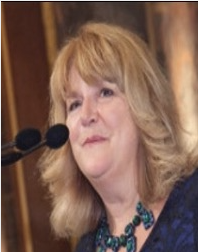
Katrina Cochrane is a Specialist Teacher and Assessor who has been working in the field of dyslexia for over 20 years. She has co-written two books on dyslexia as well as the Level 7 course for Specialist Teachers/Assessors and Level 4 Employers course for the BDA . She set up her company Positive Dyslexia, after leaving the BDA in 2016, and returned to the BDA in 2021 as Director of Education and Professional Studies. Katrina remains a member of the BDA Accreditation Board and is an APC reviewer for specialist assessor renewals. Through her company she carries out assessments for children and adults, trains schools and companies and puts on her annual Conference in Liverpool.
There are many myths about dyslexia that abound, but the facts are that it is genetic and it affects around 10% of the population. That could be 3 or 4 children in each class. Many children in nursery are already exhibiting dyslexic traits which should be identified as quickly as possible so that appropriate action can be taken.
The Rose Report definition of Dyslexia (2009) states that;
Dyslexia is a learning difficulty that primarily affects the skills involved in accurate and fluent word reading and spelling. Characteristic features of dyslexia are difficulties in phonological awareness, verbal memory and verbal processing speed. Dyslexia occurs across the range of intellectual abilities. It is best thought of as a continuum, not a distinct category, and there are no clear cut-off points. Co-occurring difficulties may be seen in aspects of language, motor co-ordination, mental calculation, concentration and personal organisation, but these are not, by themselves, markers of dyslexia.
(Rose Report, p. 10)
Early intervention is always seen as the best way of ensuring that the dyslexic child reaches their potential.

The BDA have an Early Years (and primary/secondary) checklist on their website which can be used as a useful starting point if you have concerns.
Areas to look for are things like:
- A difficulty reaching developmental milestones such as walking, using a knife and fork
- A family history of literacy difficulties
- Articulate but verbal ability doesn’t match up to written skills
- Difficulty concentrating
- Cannot follow verbal instructions
- Difficulty colouring within the lines
- Unable to pick up nursery rhymes
- Difficulty clapping or beating a simple rhythm in time
- Problems with learning the alphabet, sequencing the days of the week, months of the year
Some reversal difficulties such as muddling b’s and d’s can be developmental ,so don’t jump to conclusions, but gather together evidence from observation to pass onto the appropriate person.
Formal assessment of a child doesn’t normally take place until around 7/8 years of age but support can be put in place earlier. Most nurseries are very multi-sensory anyway and use visual , auditory and kinaesthetic modalities with all children.
If you are considering a more formal assessment, what do parents need to look for?
Diagnostic assessments should always be conducted by a certified person, qualified to assess.
- A Chartered Psychologist specialising in Specific Learning Difficulties registered with the Health Care Practitioners Council (HCPC)
- Specialist Teacher/Assessor with an Assessment Practising Certificate (APC) issued by one of the three providers i.e. British Dyslexia Association, Dyslexia Action or PATOSS. These need to be renewed every three years.
A specialist assessor with a Level 7 qualification , can also be used but the report cannot be used to apply for Disabled Students Allowance in the future. This may be fine if your child is young. Check if your assessor has ‘Active’ AMBDA as that means that they have kept their CPD up to date on a regular basis. You can check if your proposed assessor has a current APC by checking on www.sasc.org.uk website and putting in the name of the assessor.

Should I attend with my child?
Most assessments are carried out at the assessor’s home, so do check if you are able to stay with your child. For a young or very anxious child this may be best. However, for many children knowing their parent is only a phone call away is fine for them. It is obviously best for the child’s performance if the parent isn’t sitting with them, but play it by ear on the day itself.
How long does an assessment take?
The assessor will always go at the child’s pace and allow them to take breaks as and when needed. Generally it is around 2.5 to 3 hours. For a very young child I might do it in two sittings. Give them some healthy snacks and some water to take with them.
Generally most children enjoy the whole process and are quite happy to be tested.
What happens in an assessment?
The assessor will spend time collating information about your child before the Diagnostic Assessment. This will be gathered from a variety of sources so that a fully holistic understanding of your child is captured.
The assessor will want to gather this information from the individual themselves, teachers and SENCOs, as well as parents or carers. They will be sensitive about what information is recorded and make sure that it is used only for the purposes of the assessment itself.
Information from your child’s school...
The assessor will ask wide range of questions to your child’s teachers and SENCO to get a picture of their performance in school via a pre-assessment questionnaire.
If the assessor is carrying out the assessment in school they will talk directly to teachers and teaching assistants and to the SENCO, as well as collecting some of the information by way of questionnaires. Information collected from your child’s school will include whether your child passed the phonics test and what their National Curriculum Attainment Levels are. Some assessors may observe a lesson or look at the child’s school work too, but this is not always the case.

Information the assessor will need from you...
The assessor will need some background information from you about your child. Questions may be asked about the birth, such as whether it was a full-term pregnancy, for example. Other questions may relate to your child’s developmental history and typically, questions about developmental milestones associated with language and physical development will be asked. They will also check for any history of hearing or visual difficulties, as well as information about fine motor skills such as handwriting.
A recent hearing and eye test will be required before the assessment and a visual difficulties questionnaire will be circulated, as the assessor may advise an Optometrist appointment. If your child wears glasses or uses a specific colour overlay as their normal way of working , they should bring them to the assessment. If they are on any relevant medication this should be noted in advance and it should be taken as normal.
The assessor will ask for information about your child’s language development and the ease or difficulty with which they acquired literacy skills. There may have been previous speech and language (or Occupational Therapy) and information on this will need to be passed on. They will ask about your child’s experience of school and the kind of teaching that they have been exposed to. Have they had any additional learning support in the past and, if so, what did this entail and how useful was it?
They will also want to know if English is the only language spoken at home . if it is not then the assessor may not wish to assess the child, unless the child has lived in the UK for a significant period of time. The assessor will ask if there are any literacy challenges in the rest of the family and these will be noted, but confidentially.

The assessor will want to capture a picture your child’s family and home life (without being intrusive) and how, if any, circumstances might have affected their learning – for instance missing school during lockdown or shelter in place guidance. They will want to gather an idea of whether or not school is enjoyable or stressful, information about their memory, communication skills and social interaction, as well as what they have interests in, and how they might spend their leisure time. In the questionnaire, questions may also be asked about friendship groups and how they are perceived by their peers- as well as what their plans for the future are, and what do they perceive to be their strengths.
This blog is part of our early July focus on Early Intervention, and just how important it is get children and young people who have dyslexia to a stage where they're diagnosed and able to be linked up with the support that can make all the difference in their lives. You can catch the second part of Katrina Cochrane's exploration of early years, dyslexia and the assessment process- understanding the assessment and what measures can come from it- next week on our SWD blog!
You can also catch up with Katrina in her exclusive interview with Succeed With Dyslexia's Head of Training and Assessment Donna Stevenson, all about the importance of assessment and why it matters so much - available right now on The SWD YouTube Channel.