

Subscribe to Our Newsletter
It’s Christmas. It might only be the first week of December, but it’s still Christmas: mince pies have been in stories for about three months now, everything you own is probably covered in at least three or four coats of glitter, and you’ve already begun looking at your Christmas list and wondering if it’s too late to marry a millionaire in time for Christmas Day. It’s the most wonderful time of the year for those of us who celebrate it, but when you’ve got dyslexia, sometimes the whole Christmas thing can feel a little …overwhelming.
Although it’s not something we often think about, Christmas is a time of year where we come to rely quite heavily on our reading and writing skills. And for people with dyslexia, this can make everything fairly taxing when it comes to feeling in the holiday spirit – but not to worry! Although things might not be as simple as sitting down with a glass of eggnog and cracking on with the wrapping, the writing, the decorating and the cooking, there are a number of things that you can do to make the whole process a little easier, and bust through some of the festive stress so that come Christmas week, you can finally kick back and relax. And for people who don’t have dyslexia, this is a handy list that might be able to help you understand what somebody who does have dyslexia at Christmas could be going through when it comes to getting ready to be merry and bright.
Preparation is Key! Christmas isn’t something that you can shift back a week or two is you’re not ready for it – it’s going to happen on the 25th whether we like it and are ready for it or not. This means that it’s a good idea to start preparing for it well in advance. Some people with dyslexia and ADHD struggle with executive dysfunction, which impairs goal-directed behaviour. It largely means that they can find it difficult to plan or get started on projects, and it can be helpful to plan things out with a lot of wriggle room. But making short, snappy, bullet-pointed to-do lists helps some people. And some people work well using time-management apps to remind them of the deadlines that things need to be done by: need to make sure your cards go in the mail before the last Christmas post? Set an alarm for it! Need to make sure that you buy your Christmas Dinner vegetables before the shelves are empty, but late enough so that they’ll last until Christmas morning? Set an alarm for it! Although it might seem a little prescriptive, it can be pretty helpful.

Christmas Shopping can be really fun… or it can feel stressful. If you’re working to a budget and adding up constantly, things could get a little tricky – some people with dyslexia also have a condition called dyscalculia, which means that they struggle with their maths skills. Adding up pounds and pennies in a busy store can be a pain, and the in-store environment may not be ideal either. Full of extra people, bright colours, crowded displays, flashing lights and blaring music, shops at Christmas can be difficult for people who are neurodiverse as often they might struggle to concentrate with everything else that’s going on. Who can read a label accurately or add up the prices of a basket of presents when you’ve got Paul McCartney on top volume in one ear and a screaming toddler who wants a Lego set in the next?
It might be easier to shop online, where there are many accessibility tools to help out, such as screen-readers. Although it’s not perfect – during the festive period, many websites change their displays and layouts to something that’s more festive, but not as easy to read, with flashing banners and decorative text- it might be a little easier on the senses. And if you fancy Christmas shopping in person, you could take a buddy with some strong adding-up skills to help you out, or try to hit the stores at less busy times such as the early morning or later on at night. And if you really feel like it’s all too much, don’t forget – vouchers are a quick and easy gift solution that everybody likes; or you can even craft home-made gifts for the people you love.
Don’t forget Auntie Beryl’s Christmas card! Writing and addressing Christmas cards can be a pain even if you’re neurotypical, let alone if you have dyslexia. So many weird street names, numbers and post codes that you could get wrong, remembering the names of everybody’s children, cats, dogs and iguanas… it can be taxing. Some people find it helpful to do everything digitally: there are many places online where you can simply order and send out your Christmas cards without ever having to pick up a pen. Simply ask contacts to send you their address on a messenger service, and then copy and paste that into the address box online. The same can go for some presents too – you can order many things straight to somebody’s door without needing to pop to the shops even once! And if you really feel pressured by the writing side of things, don’t worry at all – a nice festive phonecall is much better than a piece of paper with a robin printed on it anyway.
What’s For Dinner? There are three universal, unassailable truths about the cooking of a Christmas dinner:
- Turkeys do not defrost at the rate that is stated on the packaging. You will be sat there at 9am on Christmas day with the turkey in the bath, and your hairdryer directed at its rear end. This is a rite of passage, and is largely unavoidable.
- Everybody will want something different. Some people love sprouts, some people hate them, some people think it just isn’t Christmas unless you have a starter of fresh Pembrokeshire asparagus with homemade béchamel.
- The timings will never line up. Everything needs a different amount of time, and it’ll mean that you probably won’t be able to sit down until the food is literally on the table, by which time you’re probably going to want to just settle down with a box of truffles and cry in front of The Muppets Christmas Carol.
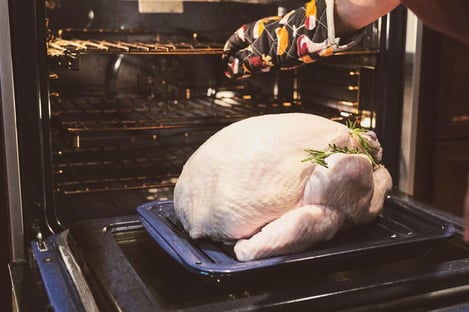
Cooking can be tricky when you’ve got dyslexia: there are lots of timings to remember, lots of different skills to master, and when it comes to big meals like a traditional western Christmas dinner- lots of package reading to do. Preparation is important, and alarms and to-do apps can help a lot; but there are also some bigger changes you can make to make it easier if you’re the one that the turkey-based trauma has fallen on this year.
Many stores offer straight-to-oven main courses that are pre-prepared and just need some oven time, and cut out all the messing around with basting, giblets and the rest of it. These also cut down on a lot of reading – often things will come with one set of instructions, as opposed to five or six on different products. It’s also a good idea to check beforehand with people about dietary requirements well before the day, so that you can make sure you’re only keeping track of one lot of things in the oven. If you’ve got vegetarian friends and family coming over for dinner and you need to provide a nut roast, do you really have to cook a turkey too? And when it comes to making sure that everything is defrosted safely and in time, it’s a good idea to give yourself more time than you need (although not so much as that things start becoming in danger of going off), so that you don’t have to keep checking on it every twenty minutes, as well as everything else you’ve got going on.
When it’s Christmas time, most of us feel kind of warm, festive and fuzzy inside – but sometimes, if you’re neurodiverse, it can be a lot too. One of the biggest tips and tricks we can give you is to reach out to friends, co-workers and family if you’re struggling with any aspects of it, and don’t feel the pressure to do everything yourself. Tech solutions are available too, such as text-to-speech devices and screen readers, and nobody is going to mind (or even really be able to tell) if their Christmas gift came straight from the supplier instead of from the stores. It’s a time when you should enjoy yourself, and not cave to the pressure to make sure that everything is perfect that some of us feel this time of year.
And if you celebrate it, have a wonderful festive period from all of us here at SWD! ☃️