
Subscribe to Our Newsletter
On the whole, we tend to conceptualise dyslexia as primarily something that has an impact on reading and writing skills – and whilst it can have other effects in an individual’s life, this is one of the main foundations on which we build our cases for assessment and support in children. We look in kids exercise books, at their reading records, at how they break down and construct words as they read and speak – and in many cases, this is great. It gives us a solid basis on which to look at dyslexia as a potential factor in a child’s individual development and a change to intervene and make sure they get the support they need.
But what about those children whose dyslexia doesn’t manifest typically – those who are outwardly very confident around learning; those who have strong masking skills, those who don't tend to voice their needs, or are more private in their personalities? It’s actually entirely possible to have dyslexia and for it not to be obvious at all when you take a look at their school books or hear them read – a trained eye might be able to spot a few tell-tale signs, but for a parent or guardian, it’s pretty difficult sometimes. Just because somebody is scoring good grades in reading and writing, it doesn’t mean it’ll always be that way as texts get harder and words get more complex, and it doesn’t mean that reading isn’t stressful and draining to them, no matter how hard they’re masking or working around it.
That’s why when making a decision as to whether a child may benefit from a dyslexia assessment (and the answer is almost always yes, whether they turn out to have dyslexia or not), it’s useful to look at more aspects of their life than their reading and writing skills.
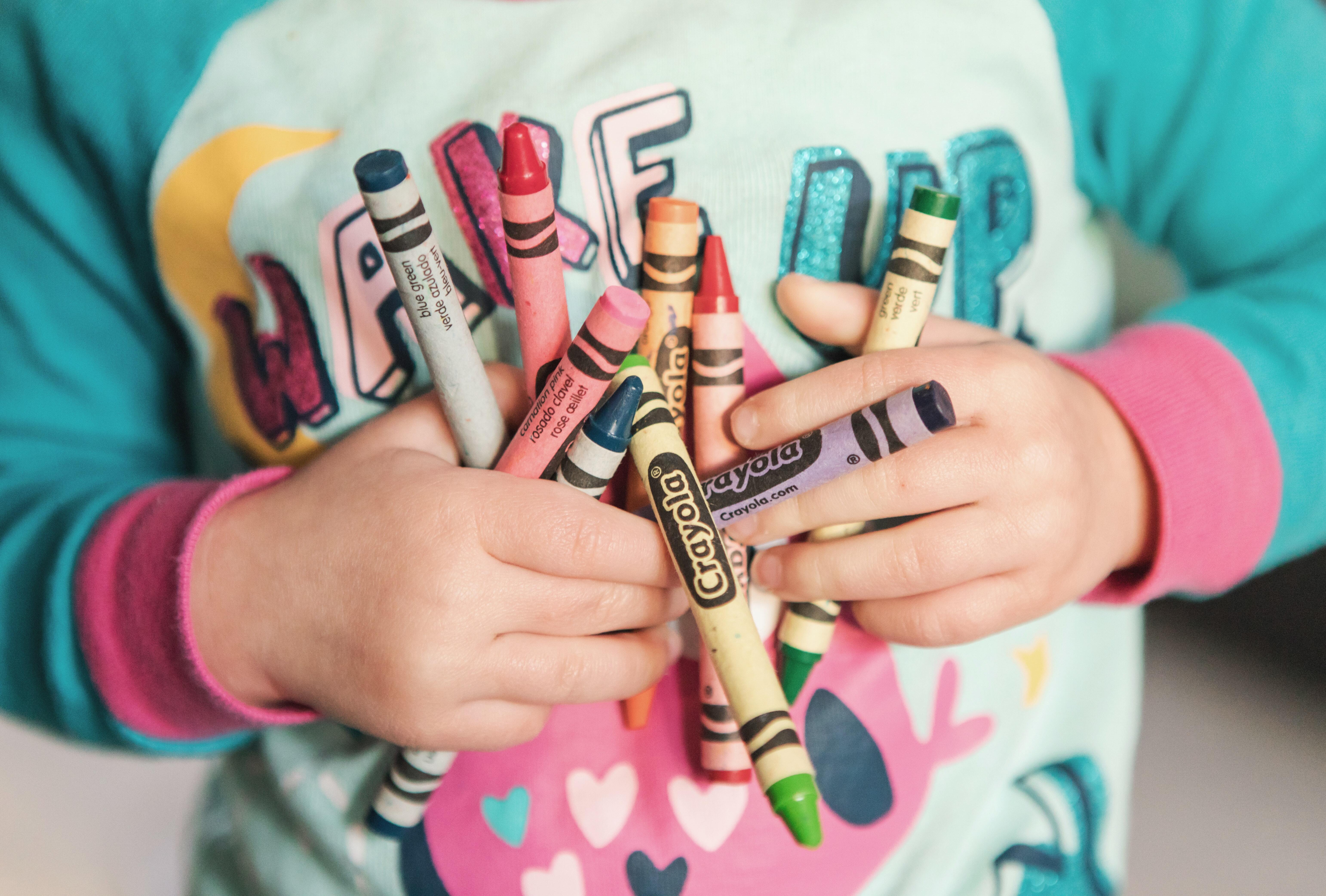
One activity in which we can see some behaviours that might be dyslexia-indicative crop up is whilst they’re getting arty. Kids are incredibly creative – we don’t say creative kids to mean a secret, sub-set of arty kids who can paint a masterpiece at age six, we genuinely mean all kids here, as they’ll likely all be creative in their own way. But that’s also kind of a problem, too, when we’re looking for signs that could be linked to dyslexia it means that there’s a huge depth and breadth of things we should be paying attention to- especially if you’re getting the vibe that they may have dyslexia but their reading and writing skills aren’t currently posing a problem in school. In order to develop a more holistic understanding, we’ve got to look a little deeper at their creative projects – do any children or young people in your life show any signs like these?

7 Signs of Dyslexia in Kids Doing Art
- Take a look at their hands whilst they’re drawing and painting: are they holding the pencil, pen or paintbrush in what looks like a comfortable and confident manner? Some children with dyslexia have an awkward pencil grip, or one that’s too tight or too loose, so pay attention to how they’re actually drawing as well as the marks they’re making on the paper.
- Many people with dyslexia excel at art – but research from the University of Brighton indicates that dyslexia might also have an impact on how an individual performs in their drawing skills. The study highlights that in cases of individuals with dyslexia, there are visible higher instances of odd perspective, forgetting images that were to be copied, forgetting or deviating from basic drawing conventions in standard non-stylised drawing, under-developed, messy or ‘childlike’ drawing and issues with visual and spatial positioning. Does the child in your care seem to forget what they’re drawing sometimes, or are their drawing skills more on the level of a child who’s a few years younger than they are?
- And whilst we’re on the subject of pens and paper – how’s their handwriting? Many people with dyslexia have ‘messy’ handwriting, and struggle with both decoding and writing in cursive. The British Dyslexia Association has some great tips on how to foster better relationships with word formation on the page, if you’re currently working with or caring for a child who’s struggling in this aspect of their learning. You can also check out The International Dyslexia Association for information on a common co-occurring condition called Dysgraphia.
- With the rise of food videos on almost any major social media network, many children and young people are getting into cooking, baking and food creation in a big way. Pay close attention to how they interact with recipes and instructions – do they always choose a video over written instructions – do they refer to instructions at all, ignore them, or Google individual queries rather than read the whole thing? Reading aversion is tricky to spot, but important to notice.
- Does their interest end at the practical? Many children love to create and do, and a lot of them will pursue the idea outside of these practical, physical confines, seeking out books about the subject when they have a choice at school or in the library. Does your child show a huge interest in drawing dinosaurs, shy away from books about dinosaurs when they’re presented with them, but interact and engage with videos? It might be indicative of reading anxiety, or simply the resignation to the fact that they feel they won’t be able to get what they want out of the written media.
- Do they struggle with things like knitting or weaving? Some – but not all- people with dyslexia have a less developed command how things fit together, struggle with things like knitting, crocheting, braiding and stitching, and often get confused and tangled. It’s the same skill set that sometimes makes it difficult for people with dyslexia to learn to tie their shoes when they’re younger.
- And do they seem to have problems remembering their left and their right when they're drawing or making? A good portion of people with dyslexia find it difficult to make split-second calls on left and right, relying on ingrained memory or even looking at their hands to be able to distinguish between the two- the shape of the left thumb and forefinger handily makes an ‘L’ shape when you look at your outstretched hands, and many adults and older people still rely on this method. Some people also say they revert to making the thumb and forefinger motion as if they were holding a pen with each hand at once, to rely on muscle memory to remind them of their dominant writing hand and the direction they’re looking at.

Not all kids who exhibit any or all of these symptoms will turn out to have dyslexia – but they’re an important set of things to be aware of if you’re currently at the stage where dyslexia seems like it’s an option. Assessment is the gateway to a brighter future that’s supported, accessible, and has comfort and ease at the heart of the everyday experience. Learning becomes easier and everyday life becomes something that an individual can take part in to a much greater degree when they’re bolstered with the right professional guidance and assistive technology. That’s why having a broader awareness of signs and symptoms like this is important – just because somebody might look on paper like they’re not struggling with their school work doesn’t mean that it’ll remain that way, and it doesn’t mean that it’s not taking a huge toll on them to keep up or to mask their symptoms. We need to foster a better world understanding of dyslexia and just how diverse and easy to miss it can be, especially in the younger generation, so that they can go forward into a stronger and more aware future with all the support they need to succeed.