

Subscribe to Our Newsletter
At this stage, we’re probably all pretty sure we know what dyslexia ‘looks like’: it’s a learning difference that primarily- but not solely- affects the skills involved in accurate and fluent word-reading and spelling (thanks, BDA). We primarily associate dyslexia with difficulties in phonological awareness, verbal memory and verbal processing speed- but what’s important to remember is this isn’t an exhaustive list.
The thing is, most people with dyslexia experience a much broader range of symptoms than the issues that they encounter in environments where they’re expected to read and to write. It’s a condition that actually has a wide spectrum of indicators, and these can vary according to how an individual’s dyslexia particularly manifests, what support they’re receiving, how old they are, and even- according to some research- what gender they are too. The chances are that if you have dyslexia, you’re well aware of at least some of these co-occurring symptoms- but if you’re an advocate, a parent, or even another a member of the global neurodiversity community who doesn’t have dyslexia, you might be surprised by some of the ways that dyslexia can manifest, especially when we’re young.
So here are ten signs of dyslexia that some people might not have encountered before- and we’re definitely not saying that there’s only ten, either. Dyslexia can manifest and have an impact on your lived experience in so many ways that it’s impossible to list each and every one of them (but we’re going to try to find as many as we can, because it does further a more holistic awareness of dyslexia and create a deeper and more accurate picture of what living with dyslexia is like– so expect a 10 More Signs of Dyslexia You Probably Didn’t Know About soon.)
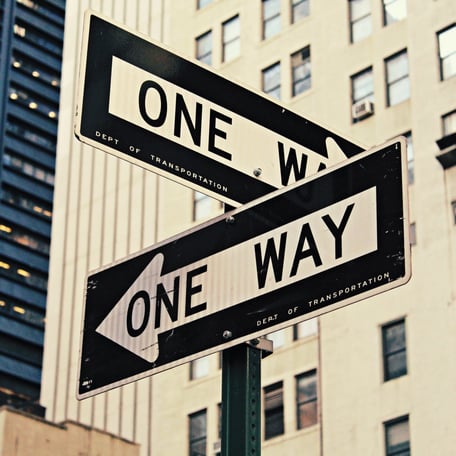
- Confusion over Left and Right. Some people with dyslexia find it difficult to work out quickly which way is left and which way is right, and many English-speakers rely on the ‘hand system’ – looking at which thumb and forefinger form a letter L for Left- to differentiate quickly. This hesitation between left and right can manifest with other directional absolutes as well, such as east and west.
- Struggling to learn to tell the time. This one is perhaps a little redundant in the age of digital chronology where most of our time-telling comes in a number format instead of reading the face of a clock, but there’s some research evidence that suggests than an early inability to grasp the analogue clock face as a time-telling method might be indicative of having dyslexia, as it relies on the same visual-symbolic processing systems that decode letters and words that we read.
- Poor Sequence Memory. Overly simplistic analogy time! Perhaps you’ve decided to make a cake. Although someone’s talked you through the recipe a couple of times, you’re still struggling to remember which way around you’re supposed to add the eggs and the flour and the baking soda. Or perhaps you’ve been given directions to somewhere, and you can’t remember if it’s right and then left, or left and then right. This could be part of what we call having a ‘poor sequence memory’, which means you struggle to recall what order things go in or happened in, and a significant portion of people with dyslexia seem to struggle with these kinds of mental tasks.
- The Shoelace Thing. Was there a time in your life where everybody else in your class had moved onto lace-up shoes and you were still wearing slip-ons or those weird sticky-spiky Velcro fastenings? It might have been due to your dyslexia – according to a lot of people, struggling to learn to tie your shoelaces is actually a pretty common occurrence in folks with dyslexia, as well as those with co-occurring conditions like dyspraxia too. And it's not just about shoelaces, either: any complex fastenings, hand actions or fastenings that require memorising a sequence can be affected, such as braiding hair or skills like crocheting and knitting.
- Delayed Hand Dominance. For most children, a hand preference tends to emerge between the ages of two to four, and is often well established by the age of five. Somebody with dyslexia, however, might take much longer to show a preference for left and right – and some research suggests that they could be more likely to be left-handed, too.
- Messy handwriting. Sometimes people with dyslexia struggle with letter formation on a physical level, and their handwriting can be messy or difficult to read well into adulthood and later life. Letters tend to slope one way or the other and can often get cramped or tangled; and they might struggle with cursive (joined-up) handwriting, and develop this skill later than their peers. There’s also some evidence to suggest that some people with dyslexia might be prone to ‘mirror write’, and reverse letters like b and d, p and q. This might be linked with dysgraphia, a common co-occurring condition with dyslexia; however having messy handwriting as a dyslexia person doesn’t necessarily mean that dysgraphia is definitely at play.

- Rhyming is tricky. Most of our childhood literature is characterised by rhyming- from nursery rhymes to Doctor Seuss, it’s a fairly vital part of our first introduction to reading. It relies on the ability to quickly swap out one phoneme for another, and whist some children find it an easy way to open up their vocabulary and make more diverse lexical choices, a child with dyslexia might truly struggle with the idea of recalling a rhyme for even a simple word such as cat or dog.
- Hesitant Speech. Most of us pause and do some umm-ing and ah-ing a little when we speak, but for somebody with dyslexia, these pauses might be more pronounced and dominate their speech more than we’d expect them to in a conversation with an individual who doesn’t have dyslexia. Most research agrees that it’s part of the extra time and processing power that making word-sound connections might take in someone who has the condition, and it’s especially common when younger individuals are learning to read and expanding their vocabulary, but can persist into adulthood.
- Reading Anxiety. This one’s a big one- it’s only natural that somebody with dyslexia might feel daunted sometimes by the prospect of reading, especially when it’s in class and in front of their peers. They might fear that classmates could mock them for hesitant or inaccurate reading, or even that they’ll be subjected to sanctions for not reading at their expected standard by their educators. It can manifest in a number of ways, too, from physical symptoms of anxiety to recognisable mental health concerns such as anxiety and in extreme cases, depression. Adults often encounter reading anxiety too, especially in the workplace, where many people still erroneously equate lower literacy with an inability to function in a job role or low intelligence.
- And reading anxiety can sometimes lead to reading avoidance, which is where readers will actively try to move out of situations where they’ll be expected to read. This can take the form of foregoing activities and disengaging from active learning. If there’s a chance that they may be asked to read in front of the class, a learner might fake an illness or misbehave on purpose to remove themselves from the scenario, seeing it as preferable to having to read something difficult or unfamiliar on demand.
Dyslexia is much more complex than ‘difficulties reading and writing’ – it’s got a whole other set of signs and symptoms that many of us, even those active in the global dyslexia community, don’t really address or talk about as much as we should. And some people believe that within dyslexia, there are a whole host of amazing strengths and abilities too, from creativity and spatial skills to a knack for business and entrepreneurship. Developing a holistic picture of dyslexia that accurately reflects the depth of the condition is important in helping people understand themselves and their skills better, as well as developing better research and critical understandings of something that’s part of the lived experience for a huge between 10% and 15% of the world population.